

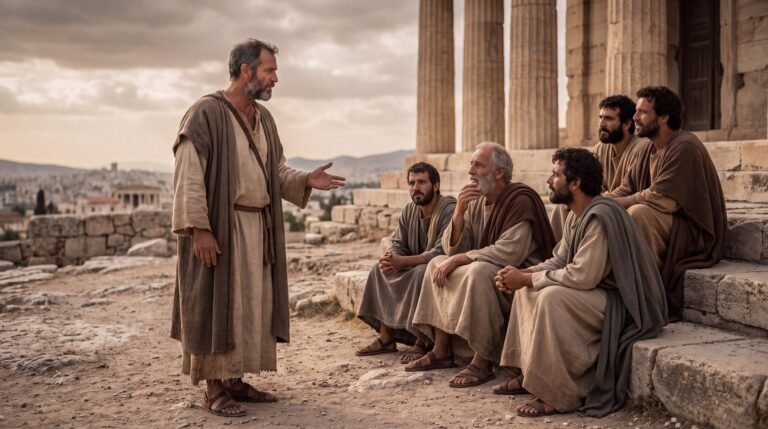
We’ve been on a journey together, haven’t we?
We’ve talked about monotheism, the belief in one true God, the God of Abraham, Isaac, and Jacob, the God who revealed himself to Moses and then the Israelites out of Mizraim, which is the ancient Hebrew name for Egypt.
We’ve also explored polytheism, the belief in many gods. Gods that I stated, if my memory serves me correctly, in chapter two, were man-made idols created by human hands.
Egypt, Babylon, Greece, and Rome built their civilizations around these false gods. Pharaohs were worshipped as divine. Babylonian kings claimed authority from the gods. The Romans believed their empire depended on the favor of many deities. Even Athens honored Athena as its patron goddess.
But Israel stepped on a different path.
The Israelites stood firm on the belief in one God who said in Exodus chapter 20, verse 3, You shall have no other gods before me.
That truth echoed throughout history because more than 3,000 years have passed, yet billions still worship the God Israel proclaimed as the one true God.
But there’s another path people have taken throughout history.
There are those who seek to understand God not through revelation or scripture, but through philosophy and reason.
Today we call these the philosophical views of God.
And it’s important that we as Christians understand these perspectives because we live in a world where people think differently about faith and truth.
Not only do people think differently, but in some parts of the world, even the freedom to explore religion, philosophy, or non-religious beliefs is heavily restricted.