CHAPTER 6: Page 6
The New Testament was written between approximately AD forty five and AD ninety five, beginning shortly after the death and resurrection of Jesus Christ. These writings are traditionally associated with apostles and early followers of Christ, including Matthew, Mark, Luke, John, Paul, Peter, James, Juanito, just kidding, and Jude, many of whom either witnessed these events directly or carefully recorded the testimony of those who did. The Bible also stands out to me as unique…
CHAPTER 6: Page 5
Ancient discoveries such as the Dead Sea Scrolls dramatically strengthened scholarly understanding of biblical preservation. First discovered by Bedouin shepherds near Qumran in 1947, including a young shepherd named Muhammad Edib, and later excavated by archaeological teams. Sorry, it’s been a rough morning. I’m just running, I’m firing on all cylinders, and I’m burning both ends of the candle, so I apologize. The Dead Sea Scrolls contain portions of Old Testament writings dating back more…
CHAPTER 6: Page 4
The Old Testament was written primarily in Hebrew with portions composed in Aramaic. The New Testament was written primarily in Koine Greek, the common language spoken throughout much of the Roman world during the first century. Over the centuries, these writings were translated into Latin, Syriac, and Coptic, and eventually hundreds of other languages, carrying the message of Scripture across continents, cultures, and generations. The process of translating the Bible became part of world history…
CHAPTER 6: Page 1
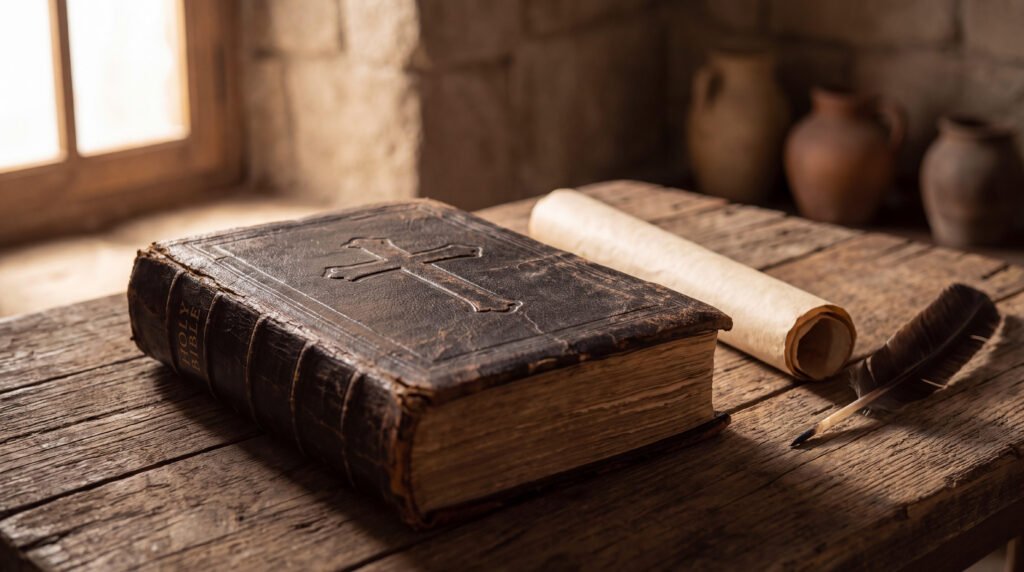
For five chapters, we’ve journeyed through the rise of monotheism, the fall of kingdoms, the worship of false gods, the pull of idolatry, the tension between faith and philosophy, and humanity’s endless search for truth. We’ve confronted polytheism, atheism, agnosticism, and the struggle between trusting the living author of life or placing faith in idols, status, power, and human understanding. But now, every road we’ve traveled leads us here. Chapter six, the Holy Bible. Today,…
CHAPTER 5: Page 3
They believe that the universe operates on natural laws that can be discovered through science and reason. Sacred texts, religious rituals, and even prayer are viewed as unnecessary to know God. Instead, they believe morality—knowing the difference between right and wrong and choosing to do what is right—comes from human reason, not divine command. One of the most well-known deists was Thomas Jefferson, the third president of the United States, who famously took several copies…