
For five chapters, we’ve journeyed through the rise of monotheism, the fall of kingdoms, the worship of false gods, the pool of idolatry, the tension between faith and philosophy, and humanity’s endless search for truth. We’ve confronted polytheism, atheism, agnosticism, and the struggle between trusting the living author of life or placing faith in idols, status, power, and human understanding.
But now, every road we’ve traveled leads us here. Chapter six, the Holy Bible.
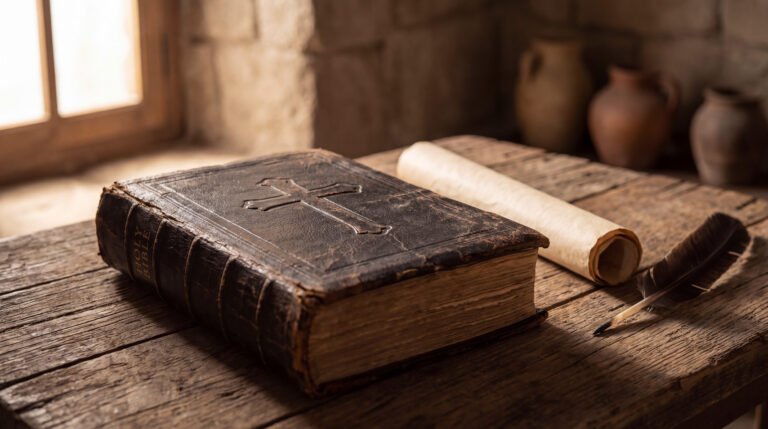
Today, the Holy Bible is far more than a collection of roughly thirteen hundred pages filled with black and red texts. Within its pages are wisdom, prophecy, history, poetry, law, and powerful stories that have strengthened faith and transformed lives from generations around the world.
For billions of people throughout history, the Bible has not simply been read, it has been trusted, memorized, protected, debated, preached, translated, and carried through some of humanity’s darkest memories. Kings have sworn upon it. Nations have built laws around principles drawn from it. Families have treasured its words through the ages, carrying them from one generation to the next as a sacred inheritance of hope, faith, and truth.
The Holy Bible is made up of different numbers of books depending on the tradition. Protestant Bibles contain sixty-six books, thirty-nine in the Old Testament, and twenty-seven in the New Testament. Catholic Bibles contain seventy-three books, including seven additional books in the Old Testament, known as the Deuterocanonical books. Eastern Orthodox Bibles usually contain between seventy-five and eighty-one books, depending on the specific tradition and canon recognized by the branch of Christianity.