

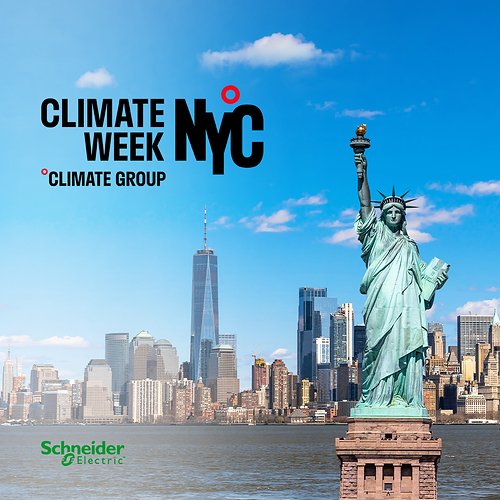
NEW YORK, NEW YORK — Schneider Electric used Climate Week NYC 2026 to highlight new research showing how artificial intelligence and advanced building systems could help reduce energy use, modernize aging infrastructure, and lower water consumption in data centers. The company said AI-enabled building optimization may reduce energy use by as much as 22% in modeled scenarios, while separate research conducted with Boston University found that one of the biggest barriers to building modernization is not the technology itself, but the ability to deploy it through available workforce, financing, permitting, and implementation capacity.
The company also released new findings on water use in large AI data centers, where cooling systems can place significant demands on local resources. In modeled 100-megawatt facilities, Schneider Electric reported that optimized liquid-cooling designs reduced annual on-site cooling water use by about 48% in Dallas and 53% in Paris compared with air-cooled designs. The research suggests that changes in cooling architecture, heat-rejection technology, and operating temperature could allow companies to support high-density AI systems while using substantially less water.
Schneider Electric also announced efforts to expand sustainability programs across the technology sector, including a partnership with Lenovo’s global sustainability network. The initiative is designed to provide participating companies with carbon-management tools, training, site assessments, and decarbonization planning. Schneider Electric said similar work with its own top 1,000 suppliers contributed to a 56% reduction in suppliers’ operational carbon dioxide emissions between 2021 and 2025, illustrating how energy efficiency and environmental goals are increasingly being tied to business operations, technology, and long-term resilience.