
CHAPTER 2: Page 4
Baal worship was closely tied to agricultural prosperity and included offerings and ritual practices believed to secure rain, fertile land, and offspring. Yet on that mountain, Baal remained silent while Yahweh answered with fire that consumed the offering, the altar, and the water, establishing unmistakably who alone held power. Elijah was not alone in confronting Israel’s compromise. Alongside him, prophets like Hosea and Amos rose during times of deep spiritual and moral decline, each delivering…
CHAPTER 2: Page 3
This collapse did not come from a single cause, but from a combination of invasions, natural disasters, disrupted trade, and failing political systems. As food shortages spread and internal conflicts intensified, these once powerful societies could no longer sustain themselves, and they rapidly fell into what political scientists would consider state failure. Anyhow, new tribes like the Israelites emerged and settled in Canaan, building and establishing their identity or presence. Their belief system wasn’t exclusive…
CHAPTER 2: Page 2
Let me step on the brake pedal for a few seconds to reflect on something I just thought of. BCE, meaning before common era, is the secular way of marking time before year one, while BC, meaning before Christ, comes from a Christian framework. Both refer to the same timeline, just expressed through different perspectives. The 14th century BCE, spanning 1400 to 1301 BCE, reaches back roughly 3400 years, if my math is correct. Between…
CHAPTER 2: Page 1
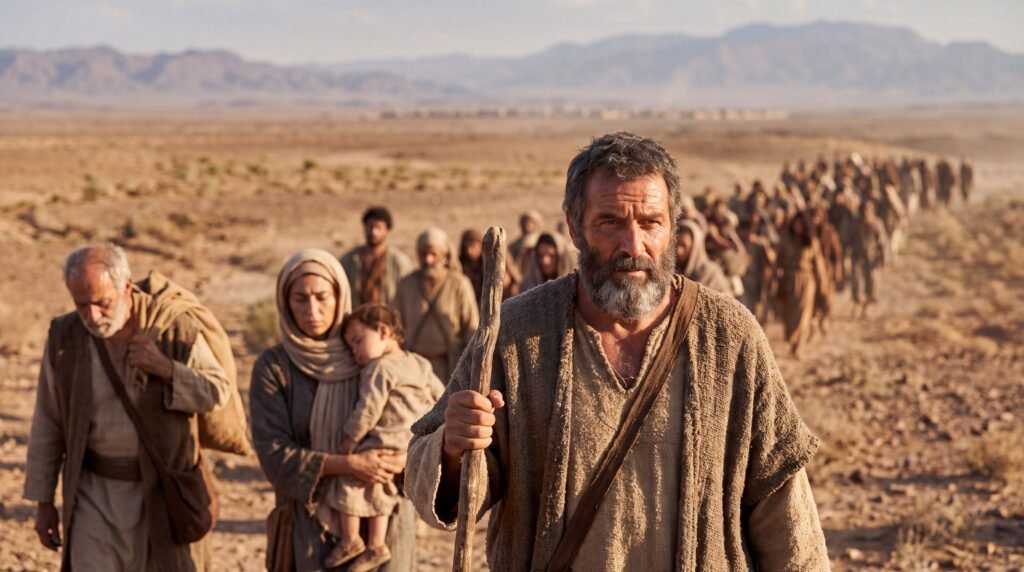
Welcome back to Kickoff Ministry. Earlier this morning, I was thinking about rotary drilling rigs, which are used in oil, gas, and scientific exploration. These rigs use drill bits, drill pipes, and drilling mud to penetrate several miles beneath the surface of the earth through layers of rock. But I want to reach far deeper than any manufacturer or business can, exploring and understanding various worldviews when it comes to God, gods, goddesses, and the…
CHAPTER 1: Page 8
Psychological research consistently shows that people are naturally wired to seek meaning, purpose, and connection beyond themselves. Even as traditional religious affiliations decline in many societies, individuals continue to pursue forms of transcendence through personal spirituality, deep relationships, creative expression, or a sense of belonging to something greater. This suggests that the desire for meaning is not simply a byproduct of culture or upbringing, but rather a fundamental aspect of human nature. Whether or not…
CHAPTER 1: Page 7
Christianity presents the opposite claim. God is not a product of human imagination. Humanity is the product of God’s creation. We were made by Him and for Him. Our purpose, identity, and unity do not come from something humanity invented. They come from the one who invented us. Modern sociologists, psychologists, and religious scholars have studied what happens when traditional religious beliefs such as Christianity, Judaism, and Islam decline in certain societies. Interestingly, they learn…
CHAPTER 1: Page 6
But at the same time, this exploration highlights the uniqueness of the Christian faith, which proclaims respectfully that God is not distant or hidden, but has clearly revealed Himself personally through Jesus Christ, offering truth, hope, and salvation to everyone who seeks him. In the book of Jeremiah, chapter 29, verse 13, it reads, You will seek me and find me when you seek me with all your heart. This verse reminds us that the…
CHAPTER 1: Page 5
Many atheists see religious belief as a human invention and base their worldview on evidence, logic, and personal experience rather than faith. Christianity is built on the belief that there is one true living God who created everything, reveals himself personally, and offers humanity purpose, meaning, and eternal life through Jesus Christ. While atheism rejects the idea of divine authority or ultimate moral accountability, Christianity teaches that true meaning, morality, and hope are found in…
CHAPTER 1: Page 4
Jews are still awaiting the coming of the Messiah, a future human leader who will restore Israel and bring peace to the world. In contrast, Christians also believe in the God of Israel, but hold that Jesus Christ is the promised Messiah, the fulfillment of God’s covenant, and through his life, death, and resurrection, salvation is offered not only to Israel, but to all people who believe. While Judaism emphasizes a direct covenant relationship through…
CHAPTER 1: Page 3
They believe the Quran is Allah’s ultimate and perfect revelation, correcting earlier scriptures that they believe were altered over time. In contrast, Christians believe in one God who exists eternally in three persons: the Father, the Son, Jesus Christ, and the Holy Spirit. Christians hold that Jesus is not merely a prophet, but God in human flesh who came to earth to redeem humanity through his death and resurrection. While both faiths emphasize worshiping one…