CHAPTER 3: Page 4
Surrounded by Canaanite culture, many Israelites began to drift, torn between loyalty to Yahweh and the pull of surrounding practices. Instead of remaining distinct, they compromised their worship, slipping into henotheism, blending into syncretism, and at times crossing into outright polytheism. One crucial thing we have to understand is exactly why polytheism was so tempting to the Israelites. They had just moved from being desert nomads into a land of agriculture and were surrounded by…
CHAPTER 3: Page 3
For the Jewish people, the Exodus is the defining moment when God delivers Israel from slavery with power and faithfulness. At Mount Sinai, he establishes his covenant and gives a clear command in Exodus chapter 20, verse 3. You shall have no other gods before me. From that point on, Israel is called to exclusive loyalty to him. Christians believe that God later carried out the greater rescue plan, sending his son Jesus Christ to…
CHAPTER 3: Page 2
As we follow Israel’s journey through the wilderness, the rise of the monarchy, the pain of exile, and the hope of restoration, we’ll see how their understanding of God was strengthened and how monotheism became more than belief. It became the heartbeat of their identity and the foundation of our faith. Let’s begin where we left off: the Exodus, because even as God was setting Israel free, he was making a global statement. In Exodus…
CHAPTER 3: Page 1
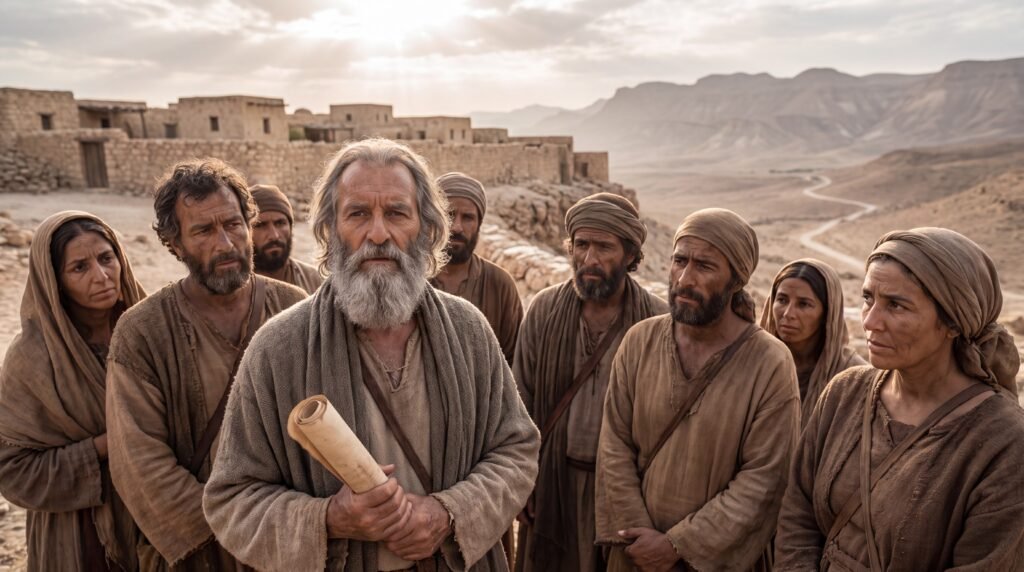
Welcome back to Kickoff Ministry. In previous chapters, we’ve explored how humanity has sought to understand the King of Kings and Lord of Lords, the boss of all bosses, God Almighty, the Lord, the Most High, the Father, the Shepherd, the Redeemer, the Creator, the Holy One, and how the Bible tells a radically different story than anything else in human history. In chapter one, we asked the big question: who is God? We explored…
CHAPTER 2: Page 10
Alright. This is where we’re going to pause for now. I’m mentally exhausted. When we turn the page, we’ll pick up where I left off, if I remember correctly, at Mount Sinai, where God gives the Ten Commandments and begins shaping Israel, not just as a free people, but as a holy nation under his feet. There is still so much more to unpack from Israel’s struggle with idolatry to the building of the temple…
CHAPTER 2: Page 9
Whether structured or simple, liturgy helps center the heart on God and brings people together in worship, sometimes. Returning to Abraham, after the time of Abraham, Isaac and Jacob, known as a patriarchal period, their descendants, the Israelites, eventually settled in Egypt during a time of famine. At first, they were welcomed as guests, but as generations passed and their numbers increased, they became a source of fear and resentment. Over time, the Egyptians enslaved…
CHAPTER 2: Page 8
My focus is not on settling that debate, but on examining what the text reveals and what I understand to be true. During the patriarchal period, worship was simple. They built altars to remember what God had done and to offer sacrifices, and God spoke to them through visions and dreams, guiding them and reaffirming his promises. Obedience defined this relationship. In short, Abraham left his homeland. He was willing to sacrifice Isaac, and he…
CHAPTER 2: Page 7
Think about it. The name El Shaddai appears throughout the Hebrew text, especially in Genesis, and is commonly translated as God Almighty. El means God, while Shaddai is debated, possibly referring to strength, like a mountain, or to provision and sufficiency. Either way, it reveals a God who is both powerful and sustaining. In Genesis chapter seventeen, verse one, God introduces himself to Abraham, saying, I am El Shaddai, walk before me faithfully and be…
CHAPTER 2: Page 6
Even in enemy territory, Yahweh demonstrated his authority. He does not share his glory with idols, and he alone receives the credit for his work. And if you ask me about his credit history, it’s perfect, flawless. He never missed the payment. I was thinking. To understand how this transformation unfolded, let’s begin with the patriarchal period and move forward toward the post-exilic period. I think I can keep it clear and meaningful, at least…
CHAPTER 2: Page 5
Archaeology brings even greater clarity to this at Kuntillet Ajrud in the Sinai Peninsula. Inscriptions reading Yahweh and his Asherah expose a deep distortion in belief and practice discovered by archaeologist Ze’ev Meshel. This evidence shows that some didn’t walk away from Yahweh. They merged him with other beliefs. Asherah and Baal were not the only influences. There was a third figure, Ashtoreth, known as the goddess of love, fertility, and war. In 1 Kings…